
Every year, the same conversation happens in September. A retailer wants 2,000 units of a new hard-shell case on shelf for Black Friday, and they are asking whether there is still time. Sometimes there is. Often there is not, and the reason is almost never production — it is the four clocks that run around production and that nobody puts on the same page.
This is the calendar we use when a buyer tells us a shelf date. Every number in it is our published figure, and every date is arithmetic you can check.
The five clocks that decide your arrival date
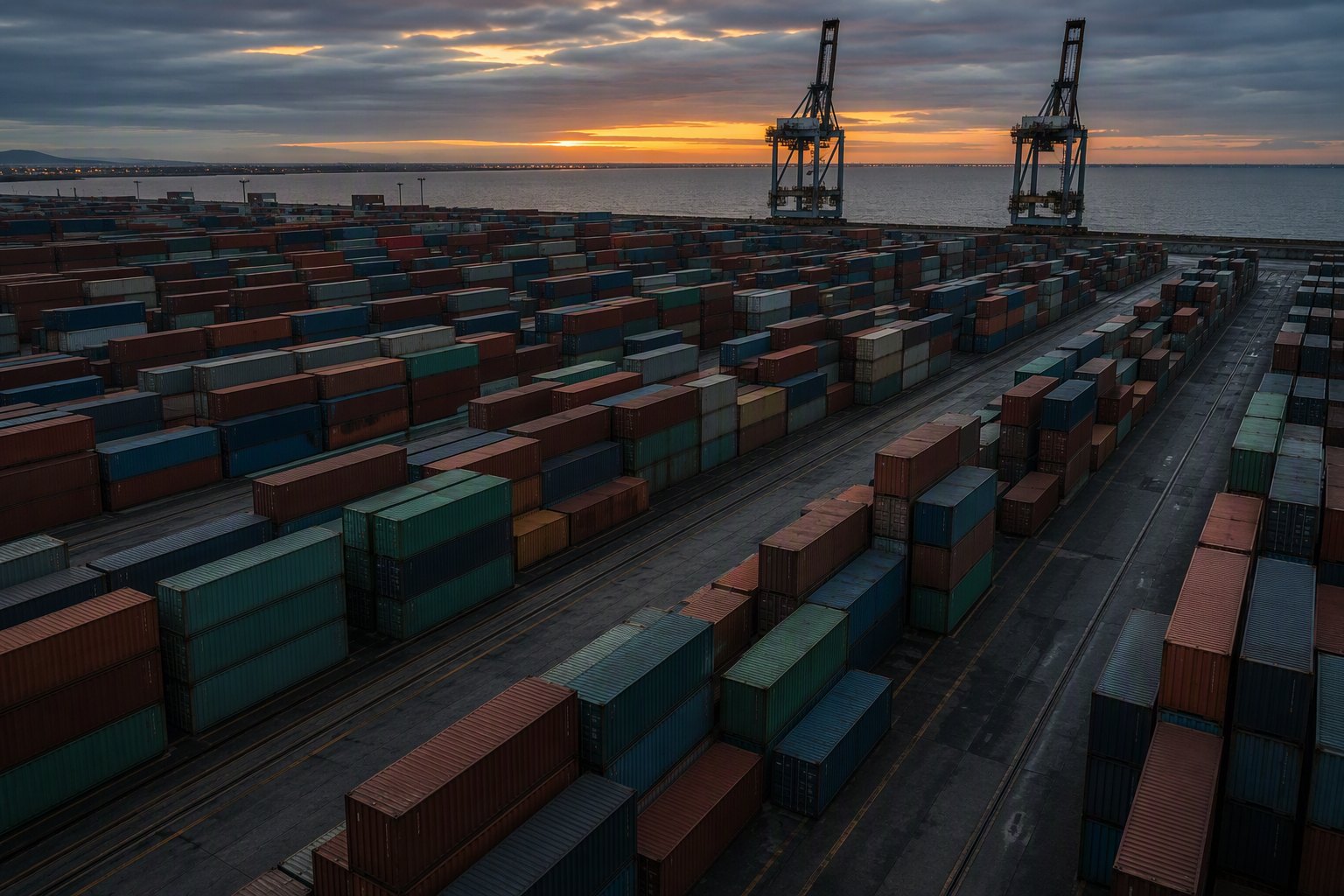
Production is only the third of five sequential clocks. Planning against production alone is why Q4 projects slip in a way that feels sudden but was arithmetically certain from the start.
| Clock | Duration | When it runs |
|---|---|---|
| 1. Tooling for any bespoke component | Up to 30 days for a wheel, lock or trolley button mould; 30 days for a logo etched on the trolley tube | Before the sample can even be built |
| 2. Sampling | 7–15 days standard; 20–30 days fully custom; 5 days if the mould already exists | Before production |
| 3. Production | 15–45 days with no customization; 20–45 days for light customization on existing moulds; 35–45 days for a new programme | After deposit and sample approval |
| 4. Booking and inland trucking to port | 4–9 days | After production is packed |
| 5. Ocean transit, then clearance and delivery | 14–20 days to US West Coast; 25–35 to US East Coast; 28–33 to Europe; plus 3–10 days clearance and delivery | Last |
The two clocks people underestimate are the first and the fourth. Tooling sits entirely outside production and can add a month before a sample exists. Booking and trucking looks trivial until a peak-season week when there is no space on a vessel at any price.
Three calendars, worked backwards from one shelf date
Take a concrete target: stock in a US West Coast distribution centre on 15 October 2026, six weeks before Black Friday on 27 November. That is a common target, and it is the one that decides whether Q4 is comfortable or expensive.
| Order type | Total elapsed | Place the order by | If everything runs at the fast end |
|---|---|---|---|
| No customization (existing design, standard colours) | 36–84 days | 23 July 2026 | 9 September 2026 |
| Light customization on existing moulds | 41–84 days | 23 July 2026 | 4 September 2026 |
| New programme (new mould, custom components) | 93–129 days | 8 June 2026 | 14 July 2026 |
The arithmetic behind the first row, so you can check it: production 15–45 days, booking and trucking 4–9, ocean 14–20, clearance and delivery 3–10. Slowest path 45 + 9 + 20 + 10 = 84 days. Fifteen October minus 84 days is 23 July. Fastest path 15 + 4 + 14 + 3 = 36 days, which lands a 9 September order on 15 October.
For a new programme the tooling and sampling clocks stack in front of production: 30 days of tooling, then 7–15 days of sampling, then 35–45 days of production, then 21–39 days of logistics. That is 93–129 days, which is why a brand-new moulded design for Black Friday has to start in early June — and why "we will decide the design in August" is not a scheduling opinion, it is a decision to miss the season.
The same dates for a European destination
Europe adds transit time and shortens the usable window. Against the same 15 October in-DC date, with ocean transit at 28–33 days:
| Order type | Total elapsed | Place the order by |
|---|---|---|
| No customization | 50–97 days | 10 July 2026 |
| Light customization on existing moulds | 55–97 days | 10 July 2026 |
| New programme | 107–142 days | 26 May 2026 |
Europe's penalty is concentrated in the transit leg, not in the factory. That matters for how you negotiate: there is nothing to be gained by pressing the factory for a shorter production window when the extra fortnight is on the water.
Peak season adds about two weeks, and it is not spread evenly
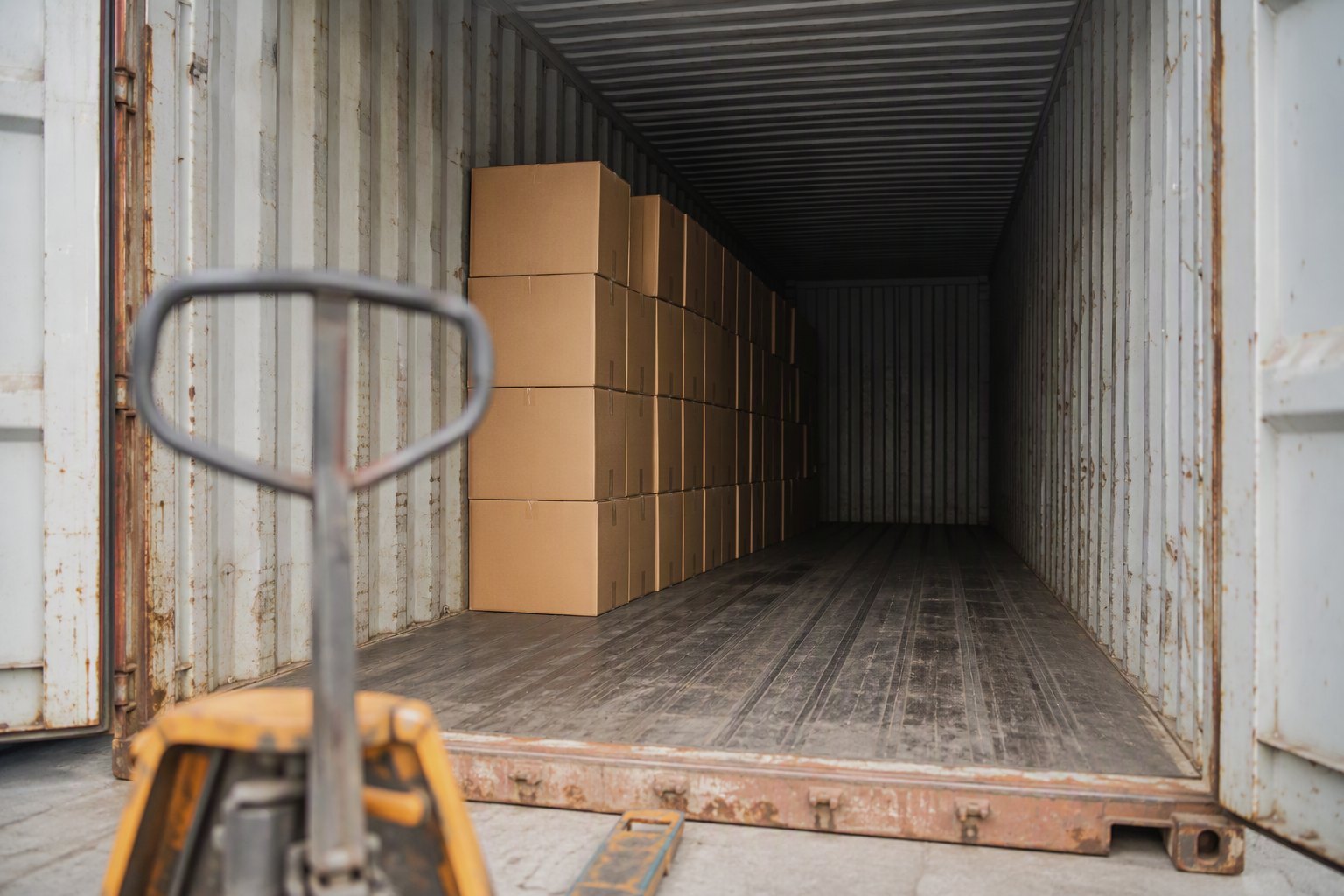
Between August and October, add roughly 15 days to the planning figure. That allowance is not really a slow factory — it reflects vessel space, port dwell time and container availability all tightening at once. In practice it lands hardest on the booking clock, which can go from a four-day formality to a two-week wait for a slot.
If you are planning against a December shelf date rather than a Black Friday one, do not simply add a month. The congestion and the retail deadline move in opposite directions: November vessels are less crowded than September ones, but a December arrival leaves no room for a re-ship if something is wrong. For December, the safer strategy is to order earlier and accept storage, not to order later and hope.
What we can compress, and what we cannot
When a customer is late, the useful conversation is about which specific clock can move. Being honest about the ones that cannot saves everyone a fortnight of optimism.
| Activity | Can it be compressed? | What it takes |
|---|---|---|
| Wheel, lock or trolley-button mould | No — 30 days | Nothing moves this. Design around a standard component instead |
| Trolley tube logo (30 days) | No | Use a printed or badge logo on another component instead |
| Shell mould | Partly — 7–15 days | An existing mould from our 200+ patterns removes it entirely |
| Sampling | Yes — to 5 days | Only when a suitable mould already exists |
| Production | Down to the lower bound, not below | Line allocation and overtime; 15–45 has real endpoints |
| Colour matching | No, below the threshold | See the MOQ thresholds below |
| Carton printing | No, below 300 pcs | Plain carton plus a printed label |
| Ocean transit | No | Change port or change mode — not schedule |
| Clearance and delivery | Yes — to about 3 days | Documents complete and correct before the vessel sails |
The MOQ thresholds that quietly decide your calendar
Custom colour is not a preference you can add to a small order. It has thresholds, and if you are below them the honest answer is a standard colour — which is available immediately and does not move the date.
- Trolley tube custom colour: minimum 3,000 pieces
- Lining custom colour: 20 inch minimum 2,000 pieces; 24 inch minimum 1,380; 28 inch minimum 980
- Carton printing: minimum 300 pieces
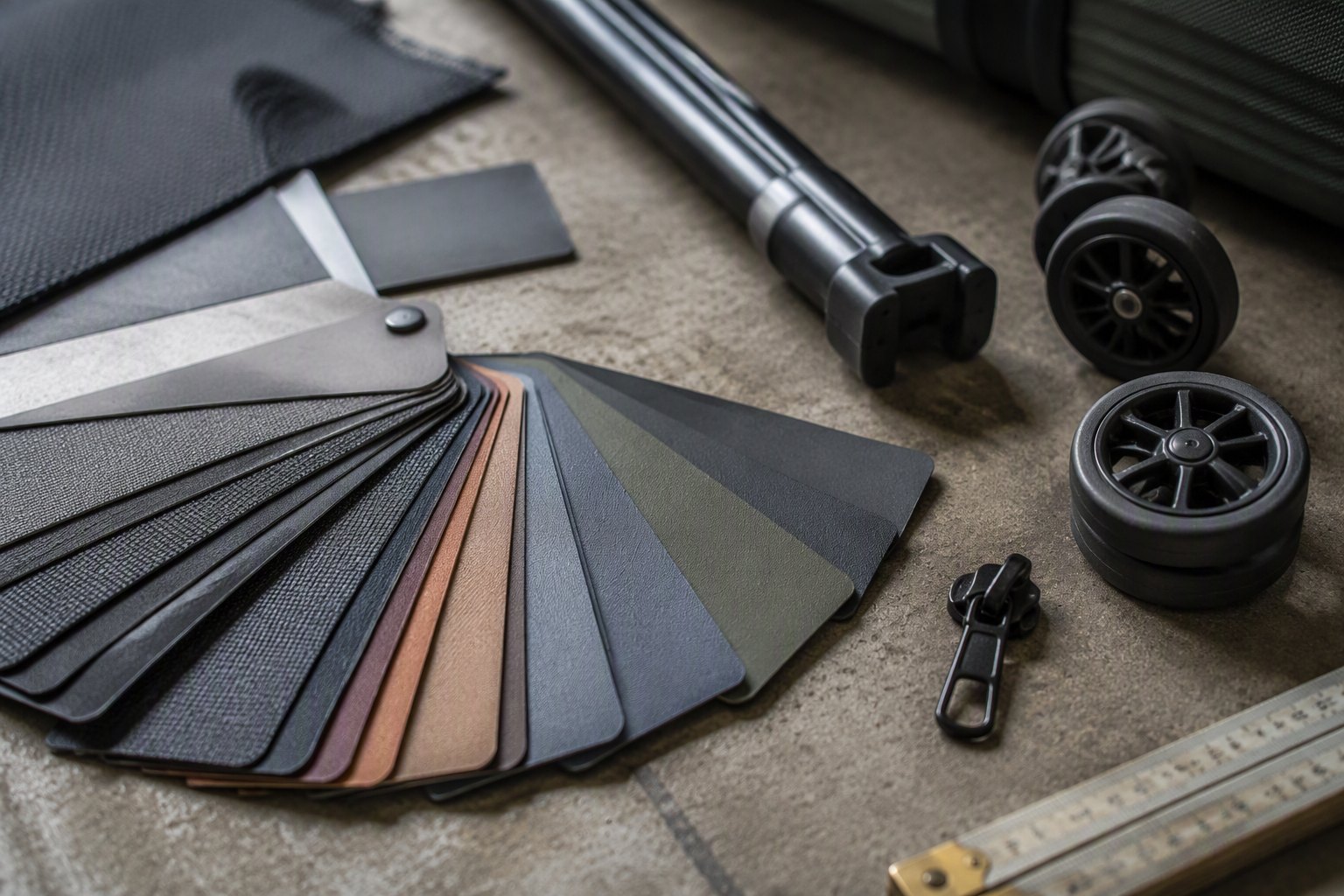
- Standard colours — black and silver across handles, locks, wheels and tubes — carry no threshold and no added time beyond the 7–15 day custom-colour window that standard parts do not need at all
This is the single most common source of an unexpected week. A buyer specifies a Pantone lining for a 600-piece trial order, and the answer is not "we will try" — the answer is that 600 is below the threshold, so either the colour changes or the quantity does. Knowing that in June rather than September is worth more than any expediting fee.
Sea or air: a decision rule, not a rate sheet
Air freight for luggage is rarely economic across a whole order, but it is frequently correct for part of one. The decision is arithmetic on your side, not ours:
- Take the units you would be short of if the sea shipment arrived late.
- Multiply by your gross margin per unit — that is what a stockout costs you.
- Compare it with the air premium for moving only that shortfall quantity.
- If the margin at risk is larger, split the order: sea for the bulk, air for the gap.
The practical constraint is packaging. Air pallets are built to different dimensions and usually carry fewer units per cubic metre than a sea container, so the split has to be planned before the cartons are made, not after. Decide the split when you place the order, not when the vessel is late.

The certificates and audit records behind these figures — ISO 9001, 14001 and 45001, the 2026 amfori BSCI summary, and the REACH and RoHS test reports — are collected on the factory evidence page.
Frequently asked questions
When do I need to place an order for Black Friday 2026?
For stock in a US West Coast distribution centre by 15 October 2026: 23 July for an existing design, and 8 June if the programme needs a new mould and bespoke components. For Europe the same shelf date moves the deadlines to 10 July and 26 May respectively.
Is 15–45 days really the production time, or is it padded?
It is the real range. Our site runs six production lines at a peak of 4,800 pieces a day against annual capacity of 500,000 units, and our published on-time delivery rate is 95%. A 15-day order and a 45-day order are different orders, not the same order with a buffer — colour, printing, lining and component choice all move you along that range.
Why does peak season add about two weeks?
Because vessel space, port dwell time and empty container availability tighten together between August and October. The factory does not slow down; the booking clock does, and it is the clock with the least visibility from the factory side.
Which single step is the biggest risk for a Q4 launch?
Bespoke tooling. A wheel, lock or trolley-button mould is 30 days and cannot be compressed. If your design depends on one of those, that decision has to be made a month before you would otherwise start.
Can I ship part by sea and part by air?
Yes, and it is often the right answer for a tight season. Decide the split when you order, because air pallets are built differently and carry fewer units per cubic metre than a sea container.
What if my order is below the custom-colour minimum?
Then the choice is a standard colour or a larger order. Trolley tube custom colour starts at 3,000 pieces; lining custom colour starts at 2,000 pieces for 20 inch, 1,380 for 24 inch and 980 for 28 inch; printed cartons start at 300 pieces.
If you are planning the rest of the order alongside the calendar, the complete production timeline sets out what happens inside each stage, and the OEM timeline covers the weeks before production starts. For the cost side of tooling decisions, see our cost breakdown from mould fees to mass production, and for what happens when the goods are built, the seven factory tests and the inspection standard. If you are still at the sample stage, the first-sample checklist is the place to start, and the capacity figures above are documented on our factory facts page.