"Can you put our logo on it?" is the most common question in a luggage enquiry and the least useful one, because the answer depends entirely on where. A logo on a shell and a logo on a wheel are not the same job, are not priced the same way, and do not carry the same lead time — one is charged by area, the other by piece, and one of them needs a mould that takes a month.
This is how logo work is actually structured on a luggage programme, so that a quote you receive from us and a quote you receive elsewhere can be compared line by line instead of in total.
Three pricing structures, and why they cannot be added together
Logo work falls into three different cost structures. Buyers who treat them as one number are the ones who are surprised later.
| Structure | What it means | Scales with | Typical on a luggage programme |
|---|---|---|---|
| Per piece | A fixed cost added to each unit | Quantity only | Printing and engraving on components: trolley tube, handle, wheel, buckle, zip puller |
| By area | The cost depends on how much surface the mark covers | Quantity and artwork size | Screen printing and UV printing on the shell itself |
| One-time tool | A single charge to make a mould, die or plate, paid once | Nothing — it is fixed | Badges, and any component where the logo is moulded rather than printed |
That last row is the one that decides whether a small logo order is viable. A per-piece charge dilutes with volume; a one-time tool does not. On a large order a mould is noise. On a 300-piece trial order it can dominate the entire logo budget, and no amount of negotiation changes that, because the tool has to be cut either way.
The component matrix: which method is available where
This is the part most quotes leave out. A method that is routine on one component may be impossible on the next, so the practical question is never "which logo method do you recommend" but "which methods exist for the part I want to mark".
| Component | Available methods | How it is charged |
|---|---|---|
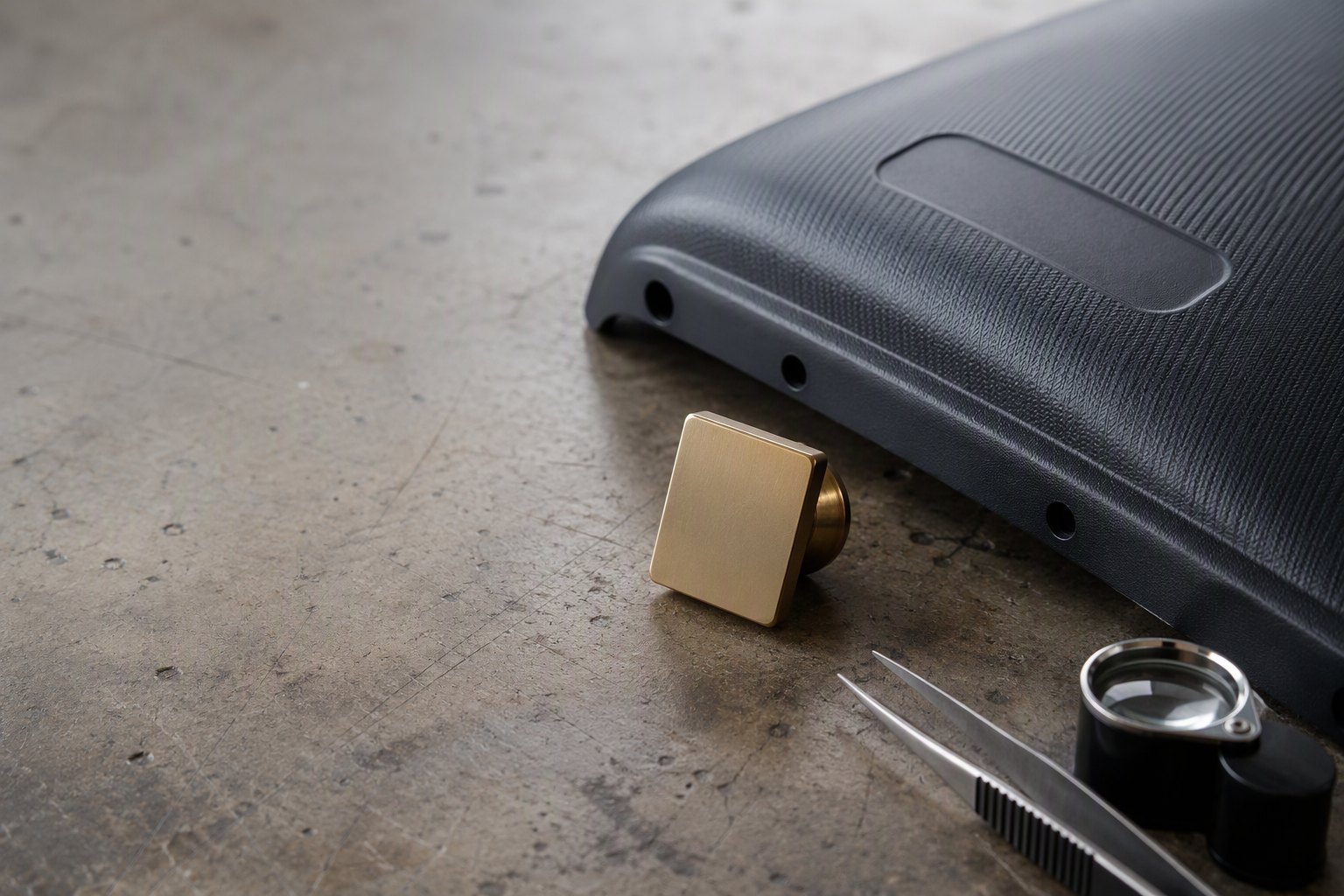
| Luggage shell | Vacuum forming (formed into the shell), custom badge, screen printing, UV printing | Printing is by area; badge and forming are tooled |
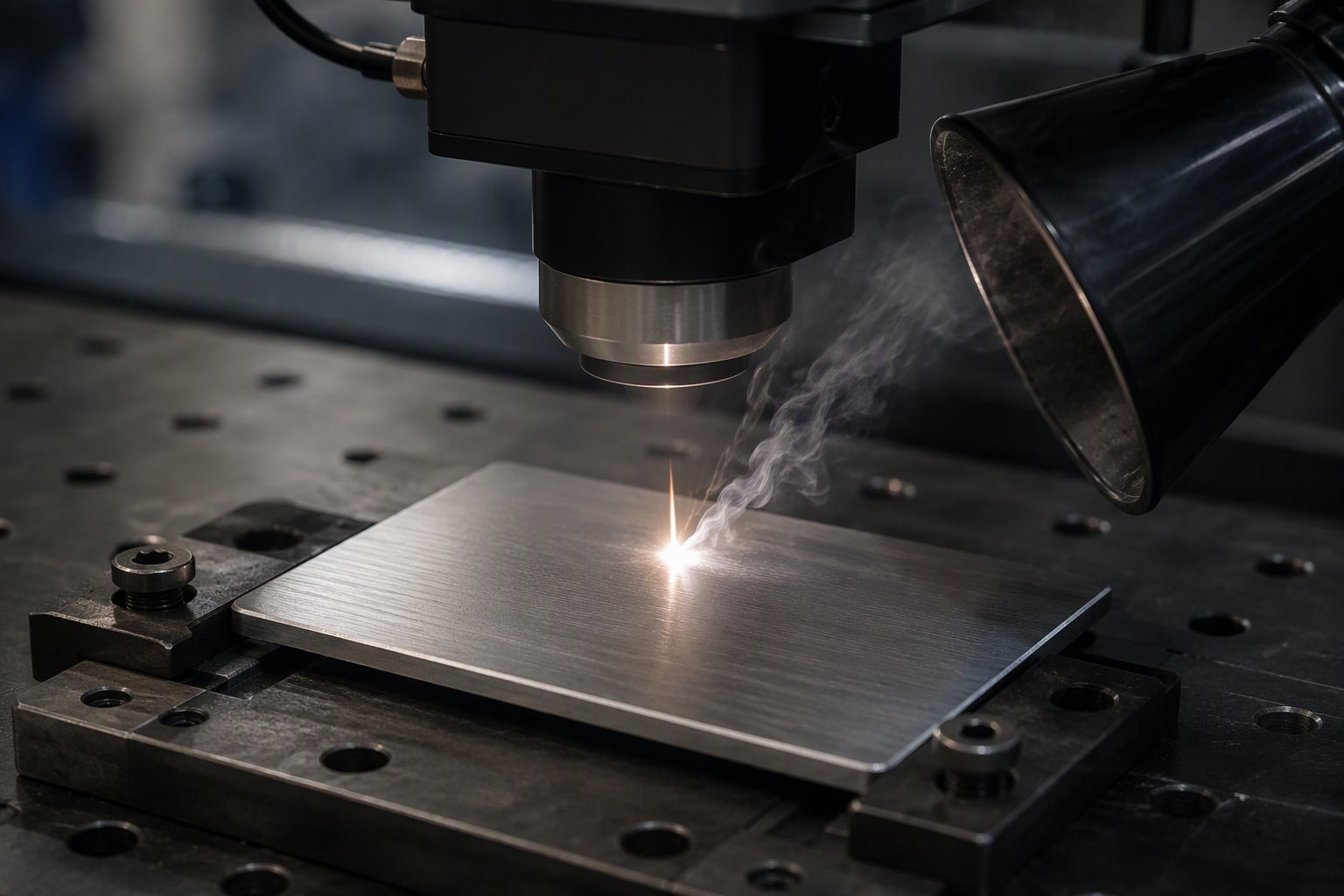
| Trolley tube | Screen printing, laser engraving | Per piece |
| Carry handle | UV printing, screen printing, injection moulding | Per piece for printing; tooled for moulding |
| Zip puller | Laser engraving, screen printing, die casting | Per piece for marking; die casting is tooled |
| Wheel | UV printing, screen printing, injection moulding | Per piece for printing; tooled for moulding |
| Trolley button | Injection moulding | Tooled only |
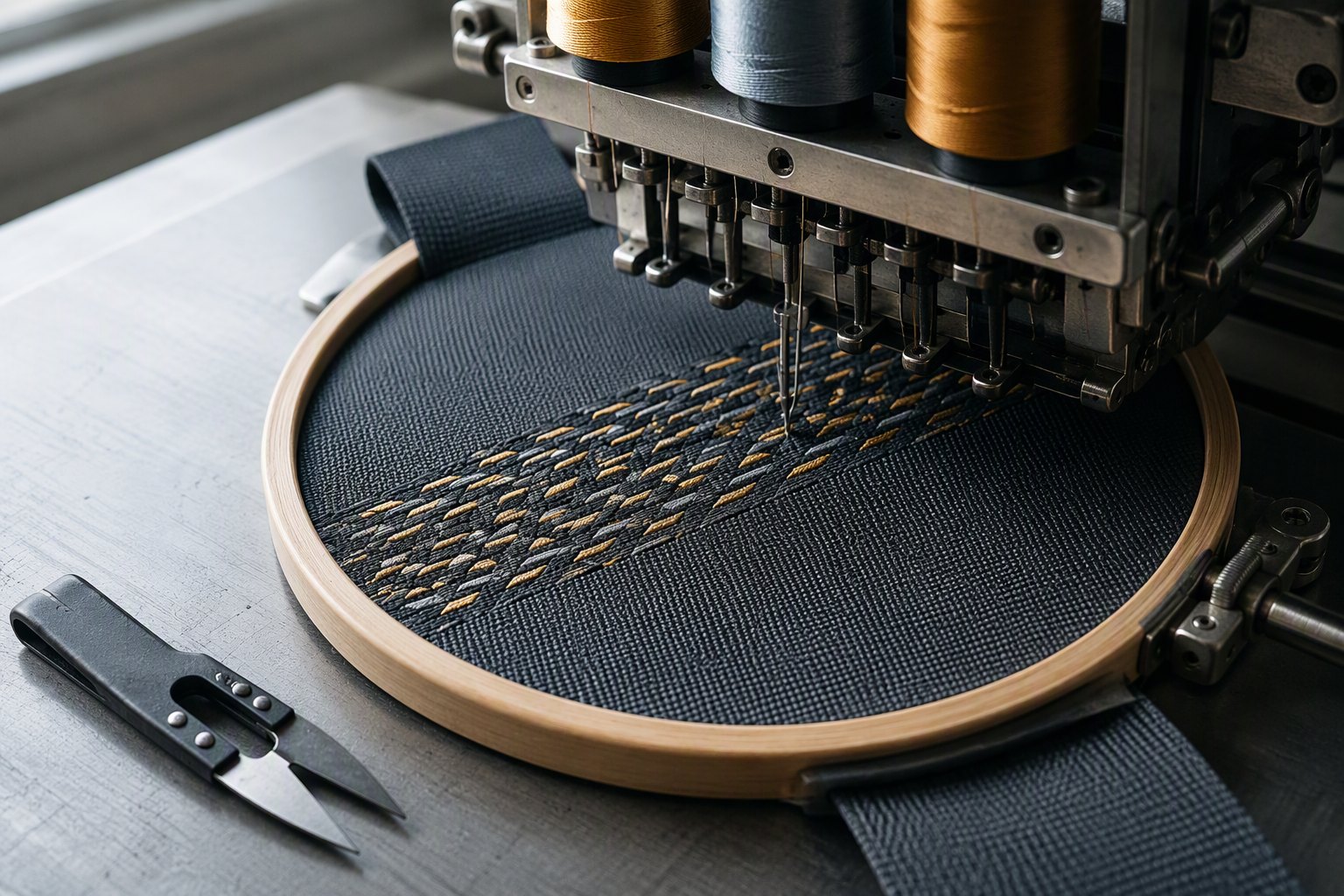
| X-shaped strap | Heat transfer, screen printing, embroidery | Per piece, with a one-time setup per process |
| Buckle | UV printing, screen printing, injection moulding | Per piece for printing; tooled for moulding |
| Inner label | Paper label, cotton label, custom badge | Per piece |
| Lining fabric | Embossing, printing | Tooled or per piece depending on process |
Two consequences follow immediately. First, if your artwork is a single-colour wordmark, most components can take it cheaply by printing. Second, if your artwork needs relief or a metallic finish, you are in the tooled column, and the component you choose decides the tool cost — a moulded buckle and a moulded badge are different tools at different prices.
Why the shell is a different conversation
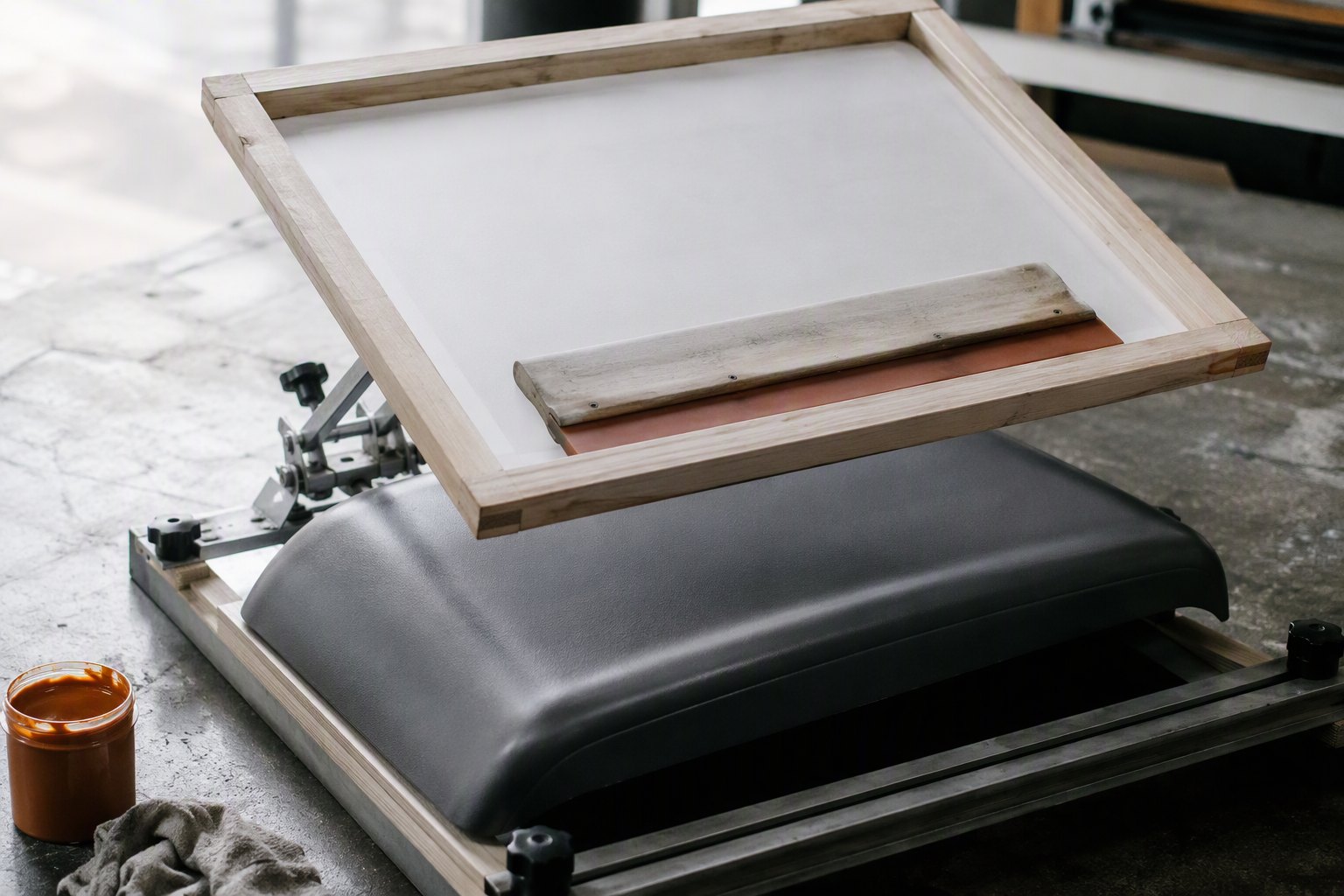
Shell printing is priced by area, which has one practical implication that catches people out: a large logo across the face is not "one logo". It is more ink, more screen or film, and a higher reject rate on a curved surface.
There is also a durability difference that matters more than cost. Printing on a shell sits on top of the surface. Vacuum forming puts the mark into the shell during moulding, and a badge is a separate part fixed to the shell. On a product that gets thrown onto airport carousels, those three are not equally durable — and the cheapest of the three is rarely the one that survives a season of handling.
The ten parts that need a tool
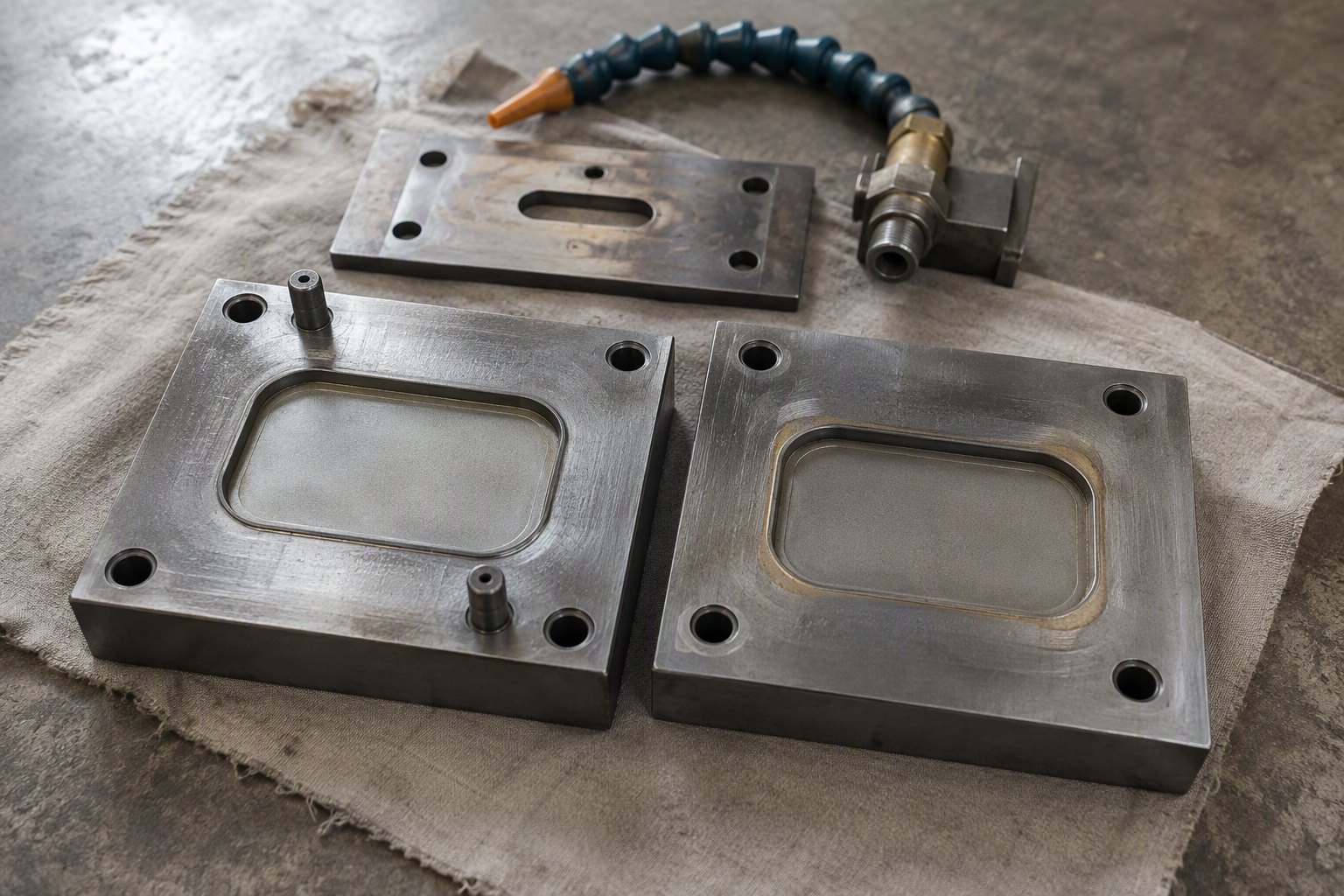
When a logo is moulded rather than printed, a tool has to exist first. On our configuration these are the parts where that applies, with the custom lead time each one carries:
| Part | Tool | Custom lead time |
|---|---|---|
| Nickel badge | Stamped article | Article processing, then per piece |
| Zinc alloy badge | Die casting tool plus plating | Article processing, then per piece |
| PVC soft badge | Adhesive label article | Article processing, then per piece |
| Carry handle | Injection mould | Mould 7–15 days |
| Zip puller | Die casting tool | Mould 7–15 days |
| Wheel | Injection mould | 30 days |
| Trolley button | Injection mould | 30 days |
| Buckle | Injection mould | Mould 7–15 days |
| X-shaped strap | Print setup per process | 7–15 days |
| Lining | Embossing or printing article | 15–20 days |
Note the two 30-day items. A logo on a wheel or on the trolley button is the single most expensive way to add branding to a suitcase, in both tooling and calendar. If a launch date is fixed, moving that mark to the handle or the zip puller can remove a month from the programme — which is worth more than the tool saving.
There is one more clock that is easy to miss: a logo etched on the trolley tube takes 30 days, because the tube has to be processed separately from the case. It is a per-piece cost with a month in front of it.
The fee that is usually negligible, and why that matters for small orders
Screen printing needs a plate. On a luggage programme that plate cost is relatively low — low enough that it is normally absorbed rather than quoted as a line item, and low enough that re-running a small batch does not require a second approval round.
This is worth knowing because it inverts the usual advice. If you are testing a market with a few hundred units and your artwork is a simple one-colour mark, printed logos on components are the cheapest credible option: a per-piece charge with essentially no entry cost. The expensive route is only justified when the mark has to be moulded or cast for a reason — relief, metallic finish, or brand consistency with a premium price point.
Standard colour versus custom colour
Logo decisions and colour decisions get tangled, so separate them. Standard black and silver parts carry no threshold and no added time. Custom colour carries both, and the thresholds are not small:
| Item | Custom colour minimum |
|---|---|
| Trolley tube | 3,000 pieces |
| Lining fabric, 20 inch | 2,000 pieces |
| Lining fabric, 24 inch | 1,380 pieces |
| Lining fabric, 28 inch | 980 pieces |
| Printed carton | 300 pieces |
If your order is below those figures, a custom-coloured logo on those components is not a negotiation, it is a different order. Plan the palette around the threshold rather than discovering it at the quote stage.
How to brief a logo job so the quote comes back right
Most logo quotes have to be revised because the enquiry did not specify the four things that drive cost. Include them and the first quote is usually usable.
| What to state | Why it changes the price |
|---|---|
| The component, not just "the case" | Shell is by area, components are per piece, some are tooled — three different structures |
| The finished size of the mark in millimetres | Area pricing makes size a direct cost driver on the shell |
| Number of colours in the artwork | Each colour is a separate pass or a separate plate |
| Whether relief or metallic finish is required | That is the difference between printing and tooling |
Send artwork as vector where possible, and state the colour reference for the mark separately from the colour of the part. "Logo in gold on a black handle" is ambiguous in a way that costs a sample cycle to resolve; a Pantone or RAL reference for the mark, and a separate one for the part, is not.
The compliance reports covering the materials and finishes described here, together with our management-system certificates and the 2026 amfori BSCI summary, are collected on the factory evidence page.
Frequently asked questions
Why is one logo cheap and another expensive on the same suitcase?
Because they are different structures. Printing on a component is charged per piece. Printing on the shell is charged by area. A moulded or cast logo needs a one-time tool before anything can be produced. The location decides which of the three applies.
Which components can take a logo without a mould?
Trolley tube, carry handle, zip puller, wheel, buckle and X-shaped strap can all be marked by printing, engraving, transfer or embroidery. The shell can be printed by screen or UV. Badges and anything injection moulded need a tool.
How long does a logo add to the programme?
Nothing for printing on most components, which runs inside normal production. A moulded logo adds 7–15 days on a handle, zip puller or buckle, 30 days on a wheel or trolley button, and 30 days for a logo etched on the trolley tube.
Do I need a mould for a metal badge?
Yes, but the tooling is lighter than an injection mould. Badges are made from a stamped, die-cast or adhesive article rather than a mould, and are then charged per piece.
Can I put my logo on a small trial order?
Printed marks, yes — the plate cost for screen printing is low enough to absorb. Moulded and cast marks are viable at trial quantity only if you accept paying a one-time tool for a small run.
Does the logo colour count as a custom colour?
They are separate. Standard black and silver parts carry no threshold. Custom colour on a trolley tube starts at 3,000 pieces; custom lining colour starts at 2,000, 1,380 or 980 pieces depending on size. The logo colour itself is part of the marking process, not the part colour.
For where logo tooling sits inside the wider cost picture, see our cost breakdown from mould fees to mass production. If your launch date is the constraint rather than the budget, the backward calendar shows how a 30-day tool moves the order deadline. Before you commit artwork, the first-sample checklist covers how to check logo position and registration, and the production timeline shows where marking happens in the schedule. Our component and finish options are documented on the factory facts page, and the certificates behind our production claims are on the factory evidence page.