
Most clothes, personal electronics, solid foods and everyday toiletries can travel in your cabin bag. The details matter: liquid toiletries need small containers, spare lithium batteries stay in the cabin, and some sharp objects belong in checked baggage.
If you are wondering what is allowed in carry-on luggage, start with three checks: the item, its packaging and your route. A permitted laptop can still sit inside an oversized suitcase, while an acceptable snack may face restrictions at your destination.
What Can You Bring in a Carry-On luggage?
Use this table for an initial packing check. Medical exceptions and product-specific restrictions are explained below.
| Item | Carry-on status | What to check |
|---|---|---|
| Clothes, shoes and books | Generally allowed | Airline size and weight allowance |
| Phones, laptops and cameras | Generally allowed | Battery condition and screening instructions |
| Power banks and spare lithium batteries | Cabin only | Capacity, quantity and terminal protection |
| Shampoo, toothpaste and perfume | Allowed with limits | Containers of 100 ml or less under standard TSA rules |
| Sandwiches, nuts and solid chocolate | Generally allowed | Destination food import restrictions |
| Yogurt, jam and other spreads | Allowed with liquid limits | Container size and liquids bag space |
| Medication and infant feeding supplies | Exceptions may apply | Separate screening and declaration of larger liquids |
| Disposable razors and nail clippers | Generally allowed | Razor type and any exposed blades |
| Knives and loose razor blades | Not permitted in carry-on | Checked baggage requirements |
Liquids: Check the Container Before the Contents
For standard TSA screening, the 3-1-1 liquids rule means:
- Each container holds 3.4 fluid ounces, or 100 ml, or less.
- Containers fit inside one clear, resealable quart-sized bag.
- Each passenger has one liquids bag.
The limit covers liquids, gels, creams, pastes and permitted aerosols. Toothpaste, mascara, sunscreen, shaving cream and spray deodorant count, even when they do not look like drinks.
A 200 ml shampoo bottle containing only 50 ml is still oversized. Transfer it into a clearly marked travel container. Conversely, several smaller bottles can travel together if they fit comfortably inside the permitted bag and it closes.
For a short trip, pack what you expect to use. A solid shampoo bar or solid stick deodorant can free space for products you prefer in liquid form. Keep bottle caps secure and place the pouch where you can retrieve it easily.
A quart-sized bag and a one-liter bag are different measurements. U.S. guidance specifies a quart-sized bag, while some other jurisdictions use one liter. Follow the wording for your checkpoint.
Some airports have changed liquid procedures as screening equipment improves. Check your departure, connection and return airports separately before taking larger toiletries.
Food and Drinks: Texture Changes the Rules
Sandwiches, crackers, nuts and solid chocolate are generally allowed through U.S. security. Yogurt, soup, honey, jam and peanut butter follow liquid or gel restrictions, so their containers usually need to fit your liquids allowance.
For breakfast on an early flight, a sandwich is easier to pack than a large yogurt pot. Portion a spread into a compliant container if you need it separately. Keep food together so an officer can inspect it without unpacking your clothes.
An empty reusable water bottle can pass through the checkpoint and be filled afterward. Water brought from home is subject to the ordinary liquid limit.
International travel adds an import check. Food that clears security may still be restricted on arrival. Meat, fresh produce and agricultural products deserve particular attention. When entering the United States, declare food and agricultural items as required, including leftovers in your bag.
Medicines and Baby Supplies Have Separate Provisions
Tablets and capsules can travel in hand luggage. Medically necessary liquids may exceed 100 ml in quantities appropriate for your trip. Tell the screening officer about larger medical liquids and present them separately for inspection.
TSA does not generally require medication in its original prescription bottle. Keeping labels and prescription details available can still help explain what you carry, especially abroad, where medicine import rules differ.
Formula, breast milk, toddler drinks and baby food also have provisions allowing more than the ordinary liquid limit. Under TSA guidance, your child does not need to be present for you to carry breast milk or formula. Related cooling supplies may undergo additional screening.
Pack essential medication somewhere you can reach during the flight. Put feeding supplies in a separate pouch to make inspection and later use easier.
Electronics and Power Banks: Plan for a Gate Check
Phones, laptops, tablets, cameras and chargers are generally permitted in the cabin. At some checkpoints, larger electronics must be removed; others allow them to stay inside. Follow the instructions for your screening lane.
Power banks are treated as spare lithium batteries and must stay in the cabin. For ordinary consumer lithium-ion batteries, 100 watt-hours is the standard threshold to check first. Airlines may set tighter quantity, capacity, storage or onboard-use rules, particularly for power banks. Confirm those details before departure.
If a label lists milliamp-hours rather than watt-hours, use: Wh = mAh × nominal voltage ÷ 1,000
For example, a 20,000 mAh battery rated at 3.7 V equals 74 Wh. Use the battery's stated nominal voltage, rather than assuming the USB output voltage. A readable rating helps staff verify the device.
Protect spare battery terminals against short circuits with suitable packaging or terminal covers. Do not travel with damaged or recalled batteries that could overheat.
If your suitcase is checked at the gate, remove power banks, spare lithium batteries and vaping devices before handing it over. Keep medication, documents and valuables with you too.
A suitcase charging port does not establish battery compliance. For luggage with powered features, check the installed battery’s specification and removal instructions.
Razors, Scissors and Everyday Grooming Items
Disposable and cartridge razors, electric shavers, nail clippers and tweezers are generally permitted under TSA rules. Loose razor blades are not. A safety razor holder can pass through without its blade; remove the blade before reaching security.
For scissors, TSA specifies blades shorter than 4 inches, approximately 10.2 cm, measured from the pivot point. UK guidance allows small scissors with blades no longer than 6 cm. These are different regional rules. For an international itinerary, check every checkpoint or pack scissors in checked baggage.
Ordinary corded hair dryers and straighteners are generally allowed. Cordless appliances can involve battery or gas-cartridge restrictions, so identify the power source before packing.
Umbrellas, walking canes and knitting needles are generally allowed under TSA guidance, though size and screening considerations still apply. Hiking poles have different restrictions from mobility canes. Check the specific item rather than relying on its appearance.
What Should Stay Out of Your Cabin Bag?
Pocket knives, loose razor blades, baseball bats and golf clubs are examples of items that generally need checked baggage. Firearms require separate transport arrangements and cannot travel in an ordinary carry-on.
Fireworks, fuel and many flammable chemicals are prohibited in both carry-on and checked baggage. Moving a dangerous item to a checked suitcase does not make it acceptable.
Start with an empty bag, including its small pockets. This helps you find a forgotten multitool, blade or battery before arriving at the checkpoint. Security officers can require additional screening or refuse an item if it raises a safety concern.
If an Item Is Refused at Security
Ask what options are available before surrendering something valuable. Depending on the airport and time remaining, you may be able to return to the airline counter, arrange an appropriate checked bag or leave the item with someone outside security. Mailing services are available at some airports, though you should not assume one will be nearby.
For an expensive tool or sentimental object, checking its status before departure gives you more choices than trying to resolve it while boarding is approaching.
Check the Packed Suitcase, Not Just Its Inch Label
The contents and the bag must both meet the applicable rules. A common U.S. airline allowance is 22 × 14 × 9 inches, approximately 56 × 36 × 23 cm, including wheels and handles. Your carrier's published allowance takes priority.
A "20-inch" description does not tell you the suitcase's complete exterior dimensions. Measure it packed, including protruding pockets and attachments. Expansion can push a bag beyond its allowance.
Weight also affects how much you can take. Under a hypothetical 7 kg allowance, a 3.82 kg empty case leaves 3.18 kg for its contents. Check the ticket's actual allowance before deciding how many shoes or electronics to pack.
CLK Carry-On Luggage for Easy Access and Compact Storage
CLK 1277: Foldable Storage with a Front Laptop Pocket
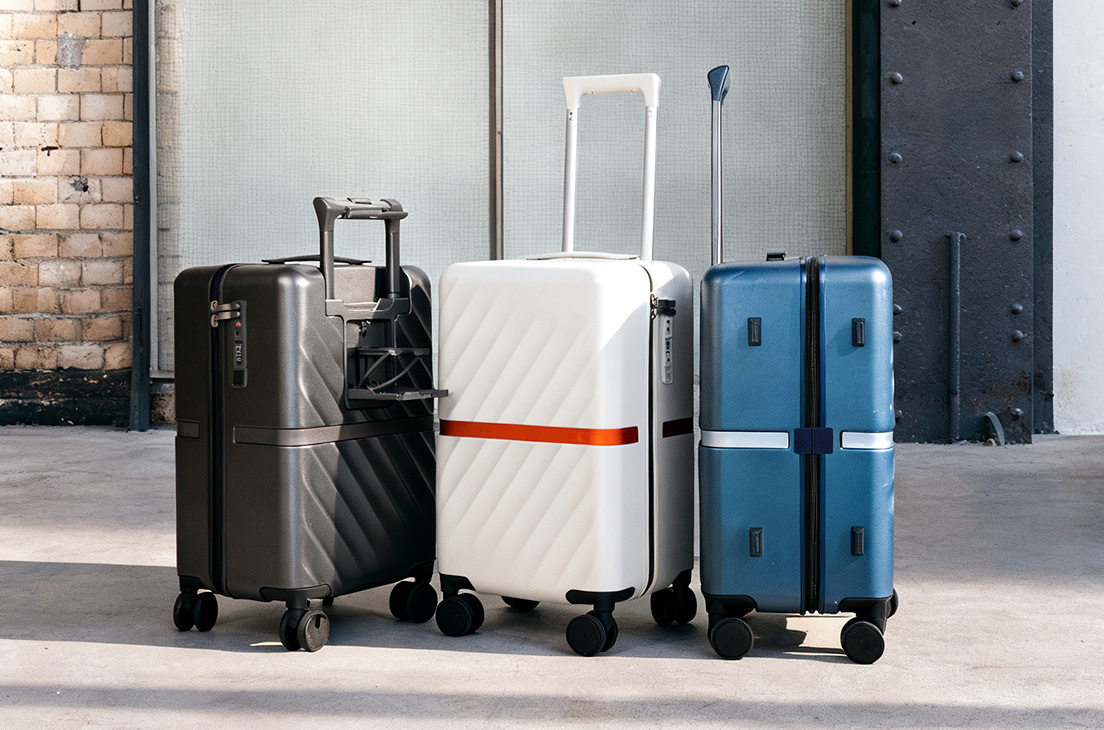
The CLK PC Foldable Suitcase 1277 combines PC front and back panels with a flexible Oxford fabric middle, allowing it to fold flat between trips. Its padded front laptop compartment keeps electronics accessible without opening the main packing space. TPU spinner wheels and a three-stage aluminum handle make it practical for moving through terminals and storing at home.
CLK 1338: Separate Essentials Storage and a Built-In Weight Check
The CLK Multifunctional Front-Opening Carry-On 1338 pairs a PC hard shell with a front laptop pocket and detachable magnetic side bag for documents, a wallet or a tablet. Its electronic weighing handle provides an approximate weight check before departure, while the fingerprint-access TSA lock offers convenient locking. The removable side bag also helps keep essentials together if the suitcase is gate-checked.
Check each model's full exterior dimensions and packed weight against your airline's allowance before traveling.
FAQ
Q1. What is allowed in carry-on luggage?
A: Clothes, books, laptops, phones, solid snacks and many everyday toiletries are generally permitted. Liquids have container limits, while sharp objects and hazardous materials need separate checks. CLK's carry-on packing and size guide covers common cabin essentials, liquid restrictions and battery placement. Check both your belongings and your packed suitcase before departure.
Q2. How much liquid can I bring in my carry-on?
A: Under standard U.S. TSA rules, each container must hold 3.4 fluid ounces, or 100 ml, or less. All containers must fit inside one clear, resealable quart-sized bag per passenger. Medical liquids and infant feeding supplies have exceptions. Keep your liquids pouch accessible when packing your CLK suitcase so you can present it separately if requested.
Q3. Can I bring a laptop and a power bank in my carry-on?
A: Laptops are generally allowed, and power banks must remain in cabin baggage. Check the power bank's watt-hour rating and your airline's capacity, quantity and onboard-use restrictions. CLK 1277 and 1338 have front laptop compartments for accessible storage. Their USB charging connections do not establish battery approval, so check the power source separately.
Q4. Is a 20-inch suitcase allowed as carry-on luggage?
A: It depends on the suitcase's complete dimensions and your airline's allowance. CLK 1277 lists dimensions of 36 × 23 × 53 cm, while CLK 1338 measures 40 × 24 × 52 cm. The 1338 exceeds the width and depth of a 56 × 36 × 23 cm allowance. Measure the packed case, including wheels, handles and attachments, rather than relying on its inch label.
Q5. What should I remove if my carry-on is checked at the gate?
A: Remove power banks, spare lithium batteries and vaping devices before handing over the suitcase. Keep medication, travel documents, valuables and essential electronics with you too. CLK 1338's detachable side bag provides separate essentials storage, while its front laptop pocket makes electronics easier to retrieve. CLK's guide to carry-on gate checks explains how to prepare.
Pack by When You Need Each Item
Put documents, medication and valuables in your personal item. Keep the liquids pouch and electronics accessible for screening, and place clothes deeper inside the suitcase.
For a business trip, leave enough room to withdraw your laptop without moving your toiletries. CLK's guide to front-pocket, top-opening and hybrid luggage explains how opening designs affect access.
Before closing the case, check liquid container labels, battery ratings, external dimensions and packed weight. Leave space for anything you expect to bring home. A bag that only closes when forced can be awkward to reopen during inspection.
If you are comparing layouts, browse CLK's carry-on luggage collection alongside your airline's measurements. Choose a case that accommodates both your belongings and the way you need to reach them during the journey.