
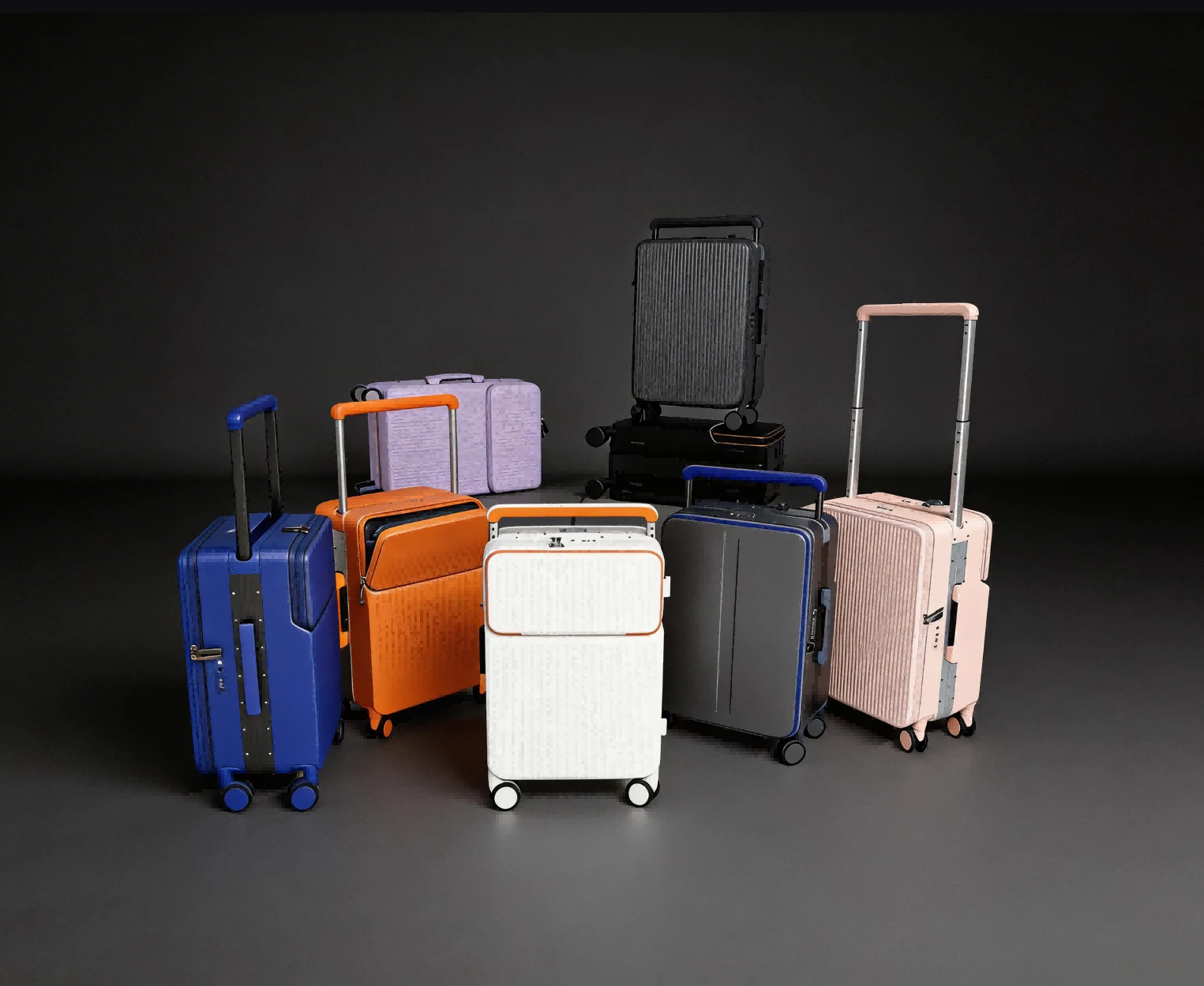
OEM & ODM Luggage Manufacturing Process – From Design to Shipment
OEM & ODM Luggage Manufacturing Process – From Design to Shipment
Complete luggage OEM & ODM manufacturing process from design to global shipment! Full customization for size, material, logo & functions, professional design proposals, flexible sample development, strict QC testing, diverse shipping options and reliable after-sales support for global B2B luggage buyers.
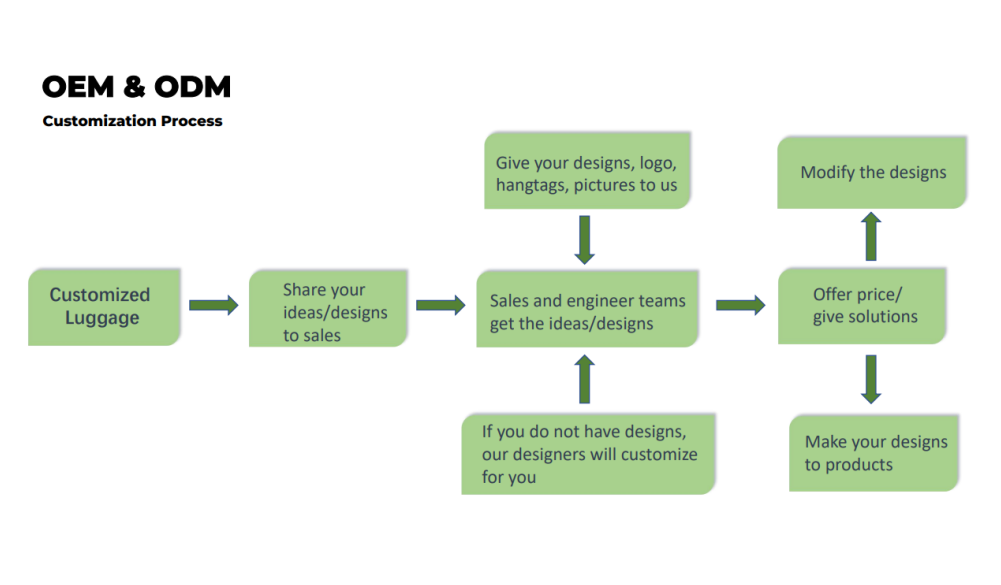
Customization process
-

Requirements
Communication -

Design And
Proofing -

Sample
Proceeding -

Confirmation
And Production -

Quality Inspection
And Packaging -

Logistics
Arrangement
The OEM and ODM process of luggage manufacturing involves several important steps to ensure product quality, customization accuracy, and on-time delivery. Below is the standard process from product concept to final shipment.
1. Requirement Confirmation
The process starts with understanding customer requirements. This includes:
- Product size (Cabin size, Medium, Large or custom sizes)
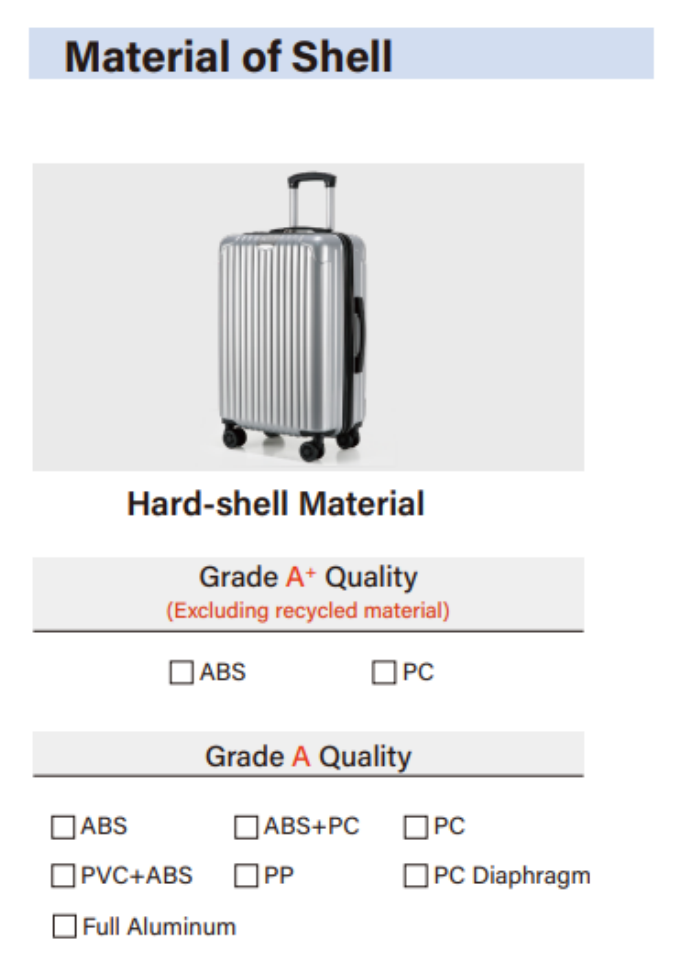
- Material selection (PC, ABS, Polycarbonate composite, Aluminum frame)
- Quantity requirements
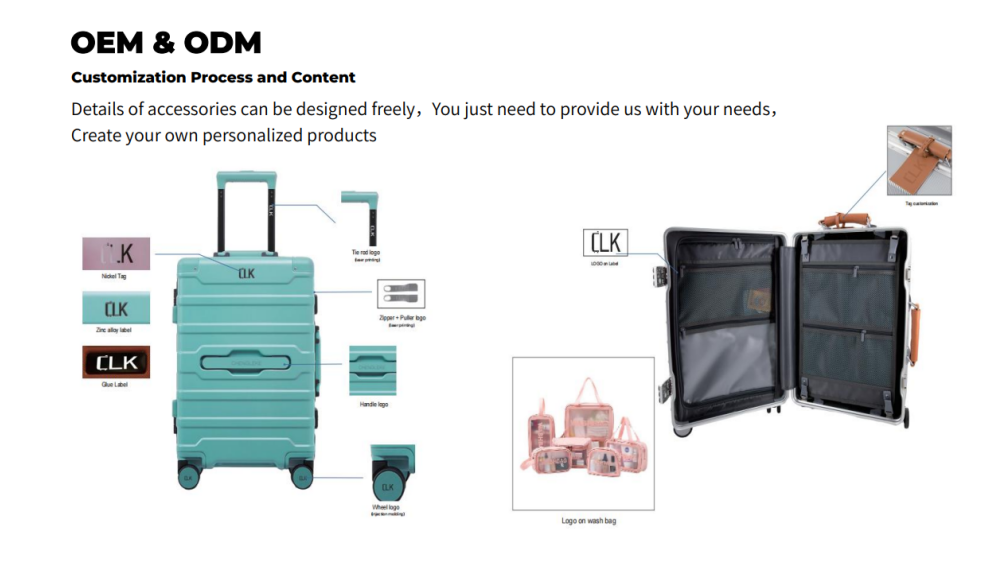
- Logo customization (Laser logo, Metal badge, Printing, UV logo)
- Functional requirements (Front opening, TSA lock, brake wheels, USB port)
Based on this information, the supplier evaluates feasibility and provides recommendations.
2. Product Design and Proposal
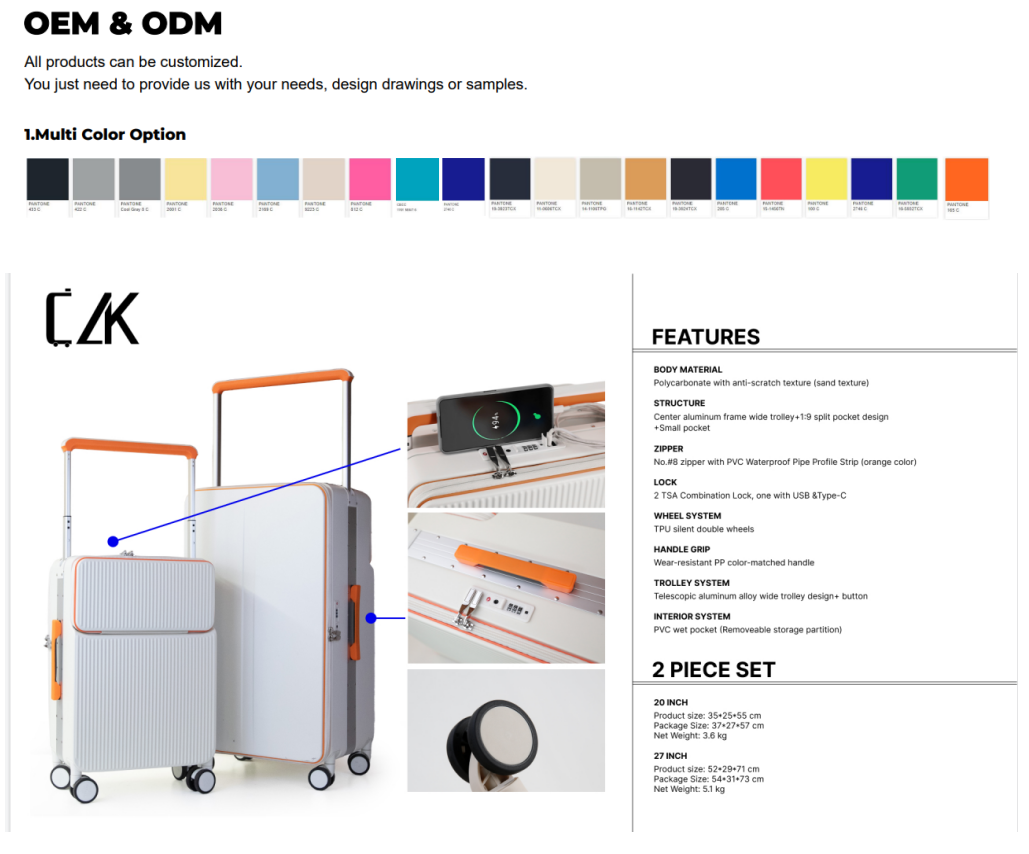
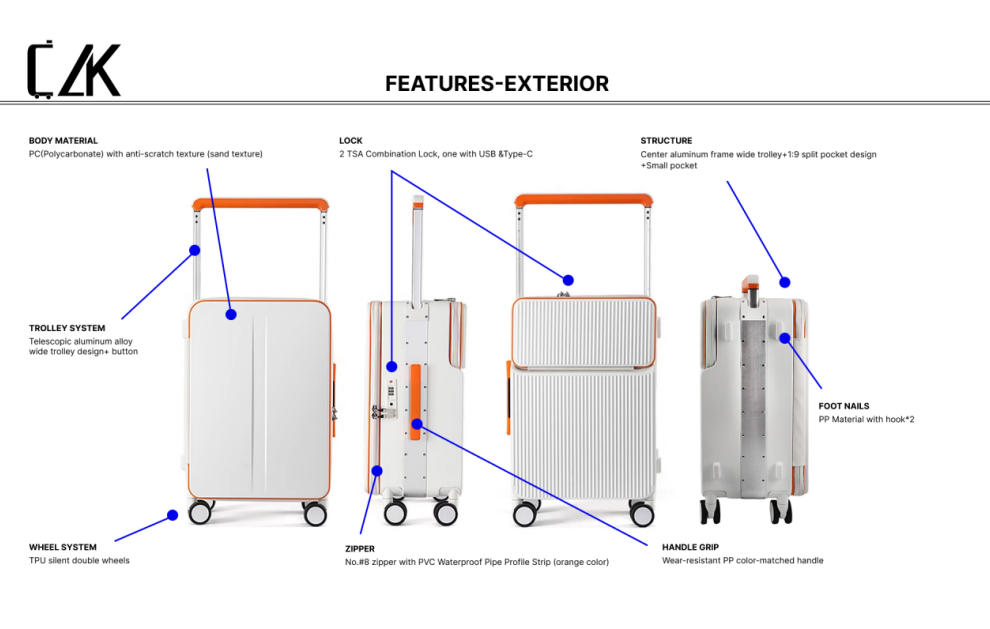
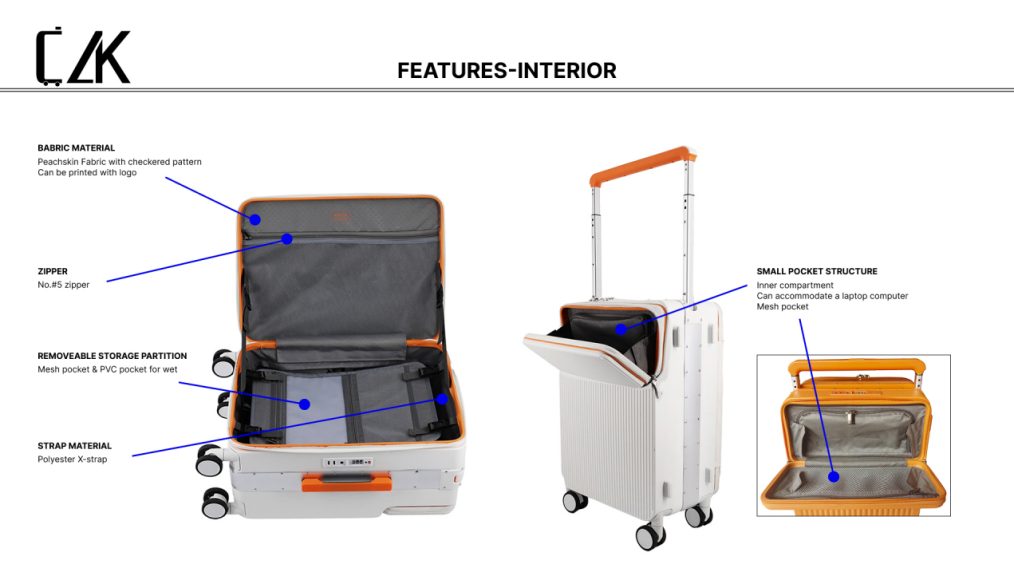
For ODM projects, the manufacturer provides design proposals based on market trends and customer positioning. This normally includes:
- Product catalogue selection
- Color suggestions
- Structure recommendations
- Customization options
At this stage, customers receive product specifications, pictures, and preliminary pricing.
3. Quotation Confirmation
After confirming the product details, the supplier provides a formal quotation including:
- Unit price
- Tooling cost (if new mold required)
- Sample cost
- Logo cost
- Estimated production lead time
Once agreed, a Proforma Invoice (PI) is issued.
4. Sample Development
Sample production begins after design confirmation. This step includes:
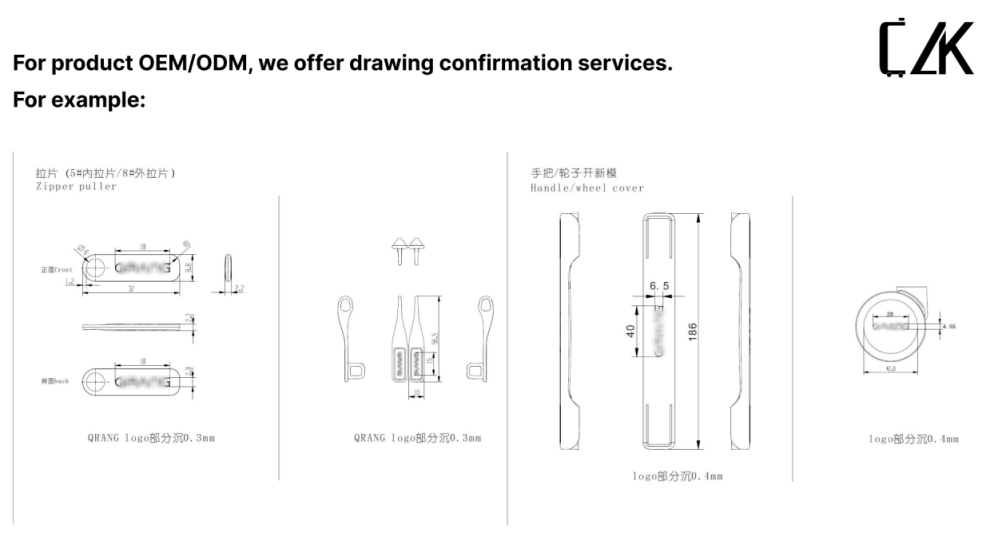
- Logo artwork confirmation
- Color confirmation (Pantone reference)
- Material preparation
- Sample assembly
Typical sample lead time:
- Standard customization: 7–15 days
- Complex customization: 15–30 days
5. Sample Approval
Customers evaluate the sample based on:
- Product appearance
- Function performance
- Color accuracy
- Logo quality
- Overall workmanship
After approval, mass production can begin.
6. Order Confirmation
Customers place the formal order and usually arrange a deposit payment (commonly 30%). The factory then prepares:
- Bill of Materials (BOM)
- Production schedule
- Raw material purchasing plan
This ensures smooth production execution.
7. Mass Production
Mass production includes several key manufacturing stages:
- Shell forming
- Component preparation
- Trolley system installation
- Wheel assembly
- Final product assembly
Typical production lead time is:
30–45 days depending on quantity and customization level.
8. Quality Control
Strict quality control ensures product reliability. Inspections usually include:
- Drop testing
- Handle fatigue testing
- Wheel rolling test
- Lock functionality test
- Appearance inspection
Third-party inspections such as SGS, BV, or TUV can also be arranged if required.
9. Packing and Shipment
After inspection approval, goods proceed to packing:
Standard packing includes:
- PE protective bag
- Dust bag (optional)
- Export carton
- Pallet packing (if required)
Shipping methods include:
- Sea freight (most common)
- Air freight (urgent orders)
- Railway transport (Europe routes)
Trade terms can be:
FOB / CIF / DDP depending on customer needs.
10. After-Sales Service
Professional suppliers also provide after-sales support such as:
- Spare parts supply (wheels, handles, locks)
- Quality issue support
- Re-order assistance
- Product improvement feedback
A reliable after-sales system is essential for long-term cooperation.
Conclusion
A professional OEM/ODM luggage supplier not only provides manufacturing, but also offers design support, quality control, and supply chain management to help customers build strong brands and competitive products.
FAQ
Common Questions from Global Clients
Follow Us
Get exclusive behind-the-scenes access to our factory floor, see how our luggage is made, and follow along at industry trade shows.