
Buyers sourcing custom stackable luggage sets first need to decide whether cases should nest for storage or connect for movement. That choice affects size combinations, components, testing, packaging and supplier quotes. Clear functional requirements also help luggage brands, importers and distributors compare samples and quotations on the same basis before production.
What Is a Stackable Luggage Set?
A stackable luggage set is designed either to nest for compact storage or to connect so that several cases can be moved together. Because the term is used loosely in online listings, buyers should verify the function rather than rely on the product name.
Nesting Sets: Smaller cases fit inside larger ones. This saves storage space, but freight savings depend on the final carton size and CBM. Request the nesting sequence, complete dimensions and a method for protecting wheels, handles and shell surfaces.
Connectable Sets: Straps, hooks or dedicated attachment points join cases during travel. Ask the supplier to demonstrate how loaded cases connect, turn and cross uneven surfaces, and whether worn connectors are replaceable.
| Type | Main purpose | Evidence to request |
|---|---|---|
| Nesting | Compact storage | Nesting sequence and carton dimensions |
| Connectable | Multi-case mobility | Connection method and loaded-use test |
| Coordinated | Consistent design | Size and component specification |
Which Stackable System Fits Your Product Line?
Choose a system based on customer needs, sales channels and supplier evidence. Each added function requires suitable design and testing.
Choose Nesting for Storage
Nesting sets suit retailers and travelers who want several sizes in less storage space. Check the nesting sequence, surface protection and carton dimensions before estimating logistics savings.
Choose Connectable Luggage for Mobility
Connectable sets may suit families or groups handling several cases. Ask how loaded cases attach, turn and cross uneven surfaces, and whether replacement connectors are available.
Consider a Coordinated Set
A standard luggage set may be more practical when buyers mainly need consistent styling and several capacities. Avoid adding a connector when customer demand or test evidence is limited. Match the design to a defined customer task before approving samples or comparing quotations.
Define the Set Before Requesting Quotations
A comparable quotation starts with one specification for every supplier. Cover size, construction, components, stackability and packaging before comparing prices.
Confirm Sizes and Market
List each case with external dimensions, capacity and intended use. Carry on limits vary by airline, cabin and aircraft, so identify relevant carriers instead of requesting a universal cabin size.
Specify Construction and Stackability
State the shell material, frame or zipper construction, opening style and finish. For nesting sets, include the nesting sequence and clearance. For connectable sets, describe the attachment method, connection points and intended loaded use.
Standardize Components
Confirm whether each size uses the same wheels, trolley system, carry handles, lock and interior fittings. List any size specific parts separately. If a lock accepted by TSA is required, request its model and supporting identification.
Add Packaging and Commercial Data
Request carton dimensions, gross weight and CBM for the quoted packing method. Clarify whether MOQ applies by set, size, color or model.
| Area | Information to provide |
|---|---|
| Market | Country, channel and target user |
| Set | Case quantity, sizes and capacities |
| Construction | Shell, frame, opening and finish |
| Stackability | Nesting sequence or connection method |
| Components | Wheels, trolley, handles, lock and interior |
| Packaging | Carton size, weight, CBM and protection |
| Commercial | Quantity, colors, logo and delivery target |
Attach drawings or reference images when available. Clear written requirements reduce quotation differences and give sample approval a consistent basis.
How Should Buyers Test Stackable Luggage Sets?
Test the complete set under its intended load. Empty cases or isolated connectors may not reveal fit, balance or movement issues.
Check Nesting Fit
Place each smaller case inside the next size. Confirm that wheels, handles and frames do not interfere, then inspect contact points for pressure marks or scratches. Record any change in fit after repeated packing under the agreed test plan.
Test Connections Under Load
Load each case to the agreed condition, attach the system and check straight movement, turns, ramps and uneven surfaces. Watch for separation, unstable movement, shell contact or stress around attachment points. Check connection and release for ease of use.
Review Supporting Components
Inspect wheels, trolley handles and carry handles while cases are connected. Confirm that movement does not twist the trolley system or concentrate load on one wheel. Check connector wear and replacement part availability.
| Test area | Evidence to record |
|---|---|
| Nesting | Fit, clearance and surface condition |
| Connection | Attachment, release and movement |
| Stability | Turns, ramps and uneven surfaces |
| Components | Wheels, handles and connector wear |
Agree on load, test frequency and acceptance criteria before sample approval. Keep photos, video and an inspection record as references for production.
How to Compare Stackable Luggage Supplier Quotes
Compare quotes against one specification. Lower prices may reflect different materials, connectors, packaging or support.
Check How MOQ Is Calculated: Ask whether MOQ applies by set, model, size or color. Confirm how customization affects the quantity.
Separate Development Costs: List sample fees, tooling, artwork and testing apart from the production price. Record whether any charges can be credited after an order.
Compare Packaging and Support: Request carton dimensions, gross weight, sets per carton and CBM. For nesting products, confirm that pricing uses the approved packing sequence. Review lead time, spare parts, warranty terms and quality claim procedures.
| Quote item | Buyer check |
|---|---|
| Product | Same sizes, materials and components |
| MOQ | Basis by set, model, size or color |
| Development | Samples, tooling and testing |
| Packaging | Carton size, weight and CBM |
| Support | Spare parts, warranty and claims |
Use the same comparison sheet for every supplier. Price differences can then be linked to specific requirements instead of unclear quotation formats.
Common Stackable Luggage Sourcing Mistakes
Specification gaps can lead suppliers to quote different products or buyers to approve an unproven function.
- Using stackable as a general label. State whether cases must nest, connect or only share one design.
- Approving appearance without testing. Check nesting fit, loaded movement, connector wear and supporting components.
- Comparing price without packaging data. Review carton dimensions, gross weight, CBM and sets per carton.
- Leaving MOQ terms unclear. Confirm whether minimum quantities apply by set, model, size, color or customization method.
- Using unsupported carry on or lock claims. Verify target airline limits and request lock identification before publishing product information.
A clear RFQ, an approved sample and recorded acceptance criteria can reduce these risks. Keep requirements measurable so production inspections use the same basis as supplier selection.
Discussing a Custom Stackable Luggage Project with CLK
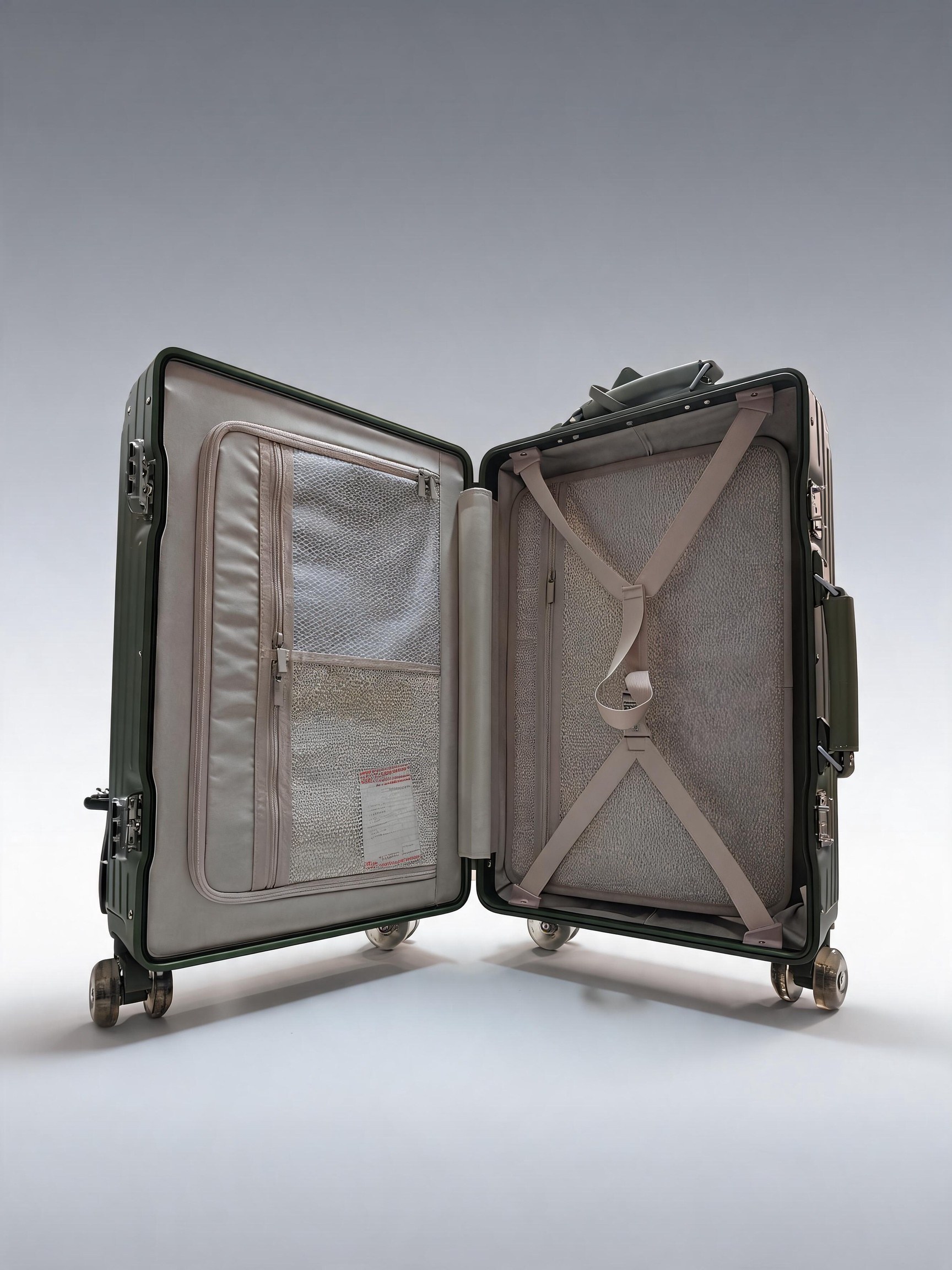
CLK lists a PC luggage platform that provides a starting point for a custom set discussion. Product information includes a narrow aluminum frame, equal split opening, transparent wheels, an aluminum trolley, several colors and sizes from 14 to 32 inches. OEM and ODM options cover colors, logos, textures and accessory details.
Information to Send
State whether the project requires nesting, connection or coordinated styling. Include target market, sizes, materials, load conditions, colors, logo method, packaging and quantity. CLK lists an MOQ of 200, but buyers should confirm whether it applies by set, model, size or color.
Confirm the Function Through Samples
Current product information does not describe a nesting sequence or connection system. Request drawings, a demonstration and a sample before presenting the set as stackable. Sample approval should record dimensions, components, packaging and agreed tests.
Send a written specification to CLK so its team can review feasibility, customization scope and quotation requirements.
FAQ
Q1. Are all luggage sets stackable?
A: No. A set needs a demonstrated nesting fit or connection system to support a stackable claim.
Q2. What is the difference between nesting and connectable luggage?
A: Nesting cases fit inside one another for storage. Connectable cases attach so several bags can move together.
Q3. How is MOQ calculated for a custom luggage set?
A: MOQ may apply by set, model, size, color or customization method. Confirm the basis before comparing quotes.
Q4. What tests should buyers request?
A: Check nesting fit, loaded movement, connector wear, wheels, handles and packaging. Agree on test conditions and acceptance criteria before sample approval.
Conclusion
Sourcing custom stackable luggage sets starts with deciding whether cases should nest for storage or connect so several cases move together. Buyers should specify sizes, materials, components, packaging, MOQ and acceptance criteria before requesting quotes. Supplier comparisons should also cover loaded movement, nesting fit, connector wear, carton dimensions, CBM, spare parts and sample approval. Clear requirements help brands compare quotations and verify stackable performance before production.