
Packing makeup for a flight involves two separate jobs. You need to meet airport security rules, but you also need to stop bottles from leaking and pressed powders from breaking. Sorting products at home can save time at the checkpoint and protect items that may be expensive or difficult to replace during your trip.
The short answer is simple. Liquid, cream, gel, paste, and aerosol cosmetics in a carry-on must be in containers of 3.4 ounces or 100 milliliters or less. They must fit together in one clear, quart-sized, resealable bag. Solid lipstick, pressed powder, eyeshadow, pencils, brushes, and makeup wipes can be packed separately.
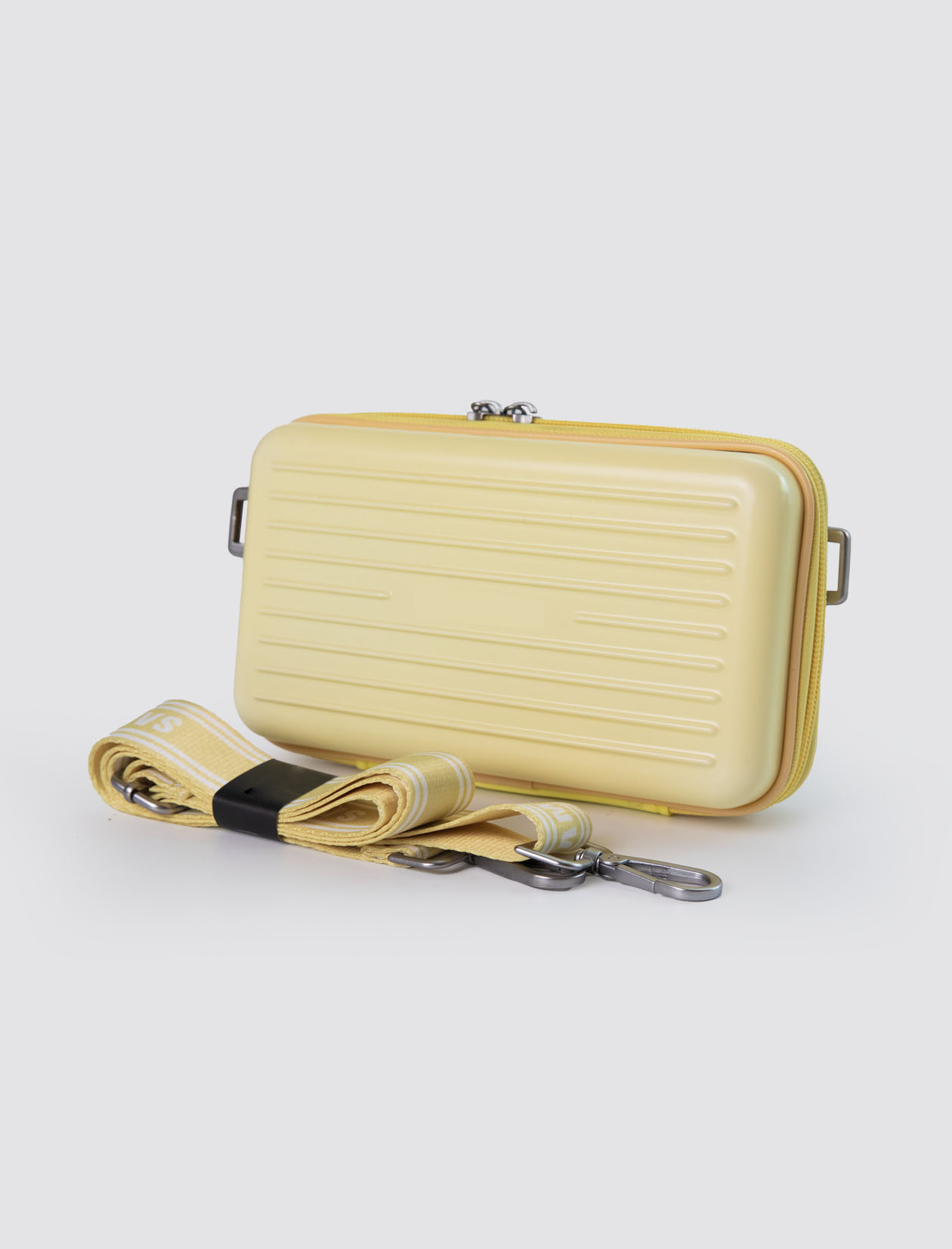
A mini hard-shell cosmetic case can protect these products from pressure and impact. It does not replace the liquids bag required for airport screening.
TSA Makeup Rules at a Glance
The TSA 3-1-1 rule applies to liquids, aerosols, gels, creams, and pastes in carry-on baggage. The capacity printed on the container matters. A nearly empty 150 ml bottle is still larger than the 100 ml limit.
Makeup, skincare, hair products, toothpaste, and other toiletries share the same quart-sized bag. Makeup does not receive a separate liquid allowance.
| Makeup item | TSA category | Carry-on action |
|---|---|---|
| Liquid foundation and concealer | Liquid | Use containers of 3.4 oz or less and place them in the liquids bag |
| Mascara | Liquid | Place it in the liquids bag |
| Cream blush and gel eyeliner | Cream or gel | Place them in the liquids bag |
| Setting spray and face mist | Liquid or aerosol | Follow the 3-1-1 rule and secure the nozzle |
| Lip gloss and liquid lipstick | Liquid or gel | Place them in the liquids bag |
| Traditional bullet lipstick | Solid | Pack it outside the liquids bag |
| Pressed powder, powder blush, and eyeshadow | Powder or solid | Pack separately and protect from impact |
| Makeup wipes | Wipes | Pack separately and keep the package sealed |
| Brushes and pencil eyeliner | Solid tools | Pack separately and protect brush heads |
The official TSA item list notes that powder-like substances over 12 ounces or 350 milliliters may need to be placed in a separate bin and may receive additional screening. Personal makeup quantities are usually well below this threshold. TSA officers retain the final decision when an item cannot be cleared during screening.
Rules can differ outside the United States. For an international itinerary, check the security authority for your departure and transfer airports, along with your airline's baggage limits.
How to Pack Makeup for Travel in Six Steps
1. Pack for the Looks You Will Wear
Start with your schedule, not your full makeup collection. A three-day trip may need one base product, concealer, mascara, a neutral palette, blush, and one or two lip colors. A wedding trip may justify an extra eye or lip option, while a beach trip may require less.
Choose products that work together. A neutral palette can cover daytime and evening looks. A powder bronzer may also work as eyeshadow. A solid makeup stick can reduce the number of bottles competing for space in the liquids bag.
2. Sort Products by Texture
Make four groups:
- Liquids, creams, gels, and sprays
- Powders and solids
- Fragile bottles and palettes
- Brushes and tools
Put every restricted liquid into the quart-sized bag first. This shows how much allowance remains for skincare and toiletries.
Keep the liquids bag easy to reach until you clear security. After the checkpoint, you can return it to your travel makeup case if there is a separate, wipe-clean area for it.
3. Reduce the Chance of Leaks
Check every cap, pump, and spray nozzle. Lock pumps where possible. For a screw-top bottle, a small clean piece of plastic wrap under the cap can provide a second seal. Keep liquids away from powders and brush heads.
Do not rely on the outer shell to contain an internal spill. A hard shell helps resist pressure from surrounding luggage, but the bottle and its closure remain the first line of protection.
4. Cushion Powders and Glass Bottles
A clean cotton round inside a compact can reduce the space between pressed powder and the lid. Keep palettes flat instead of standing them on a narrow edge.
Separate glass bottles so they cannot strike each other. Soft items such as a clean sponge pouch can fill small gaps. Avoid packing the case so tightly that the lid presses against a pump, compact, or palette.
5. Protect Brushes and Small Tools
Use brush guards, a brush roll, or a separate sleeve. Loose brushes can develop bent bristles or collect powder and cream from other products. Pack clean and used applicators separately on the return journey.
Tweezers and nail clippers are generally permitted. Scissors and other sharp tools may have additional requirements, so check the TSA item list before placing them in a carry-on.
6. Choose the Right Place in Your Luggage
Expensive, fragile, and difficult-to-replace products are usually better in a carry-on that stays with you. If you check a makeup case, position it near the center of the suitcase and surround it with clothing rather than shoes or rigid objects.
Checked baggage removes the 3-1-1 carry-on limit, but some toiletries and aerosols remain regulated. TSA cites FAA limits of 2 kilograms or 2 liters in total for restricted medicinal and toiletry articles in checked baggage. No single container may exceed 0.5 kilogram or 500 milliliters. Aerosol nozzles should also be protected from accidental release.
Hard-Shell Cosmetic Case or Soft Makeup Bag?
The right choice depends on what you carry and how much space you have.
| Consideration | Hard-shell cosmetic case | Soft makeup bag |
|---|---|---|
| Protection from crushing | Better for palettes and glass bottles | Usually needs more padding |
| Packing flexibility | Keeps a fixed shape | Fits into irregular suitcase spaces |
| Empty weight | Usually heavier | Usually lighter |
| Organization | Often uses pockets and elastic straps | Varies by design |
| Best use | Fragile makeup and frequent travel | Minimal kits and limited carry-on space |
A hard-shell makeup case is useful when impact protection matters. A soft pouch makes sense when weight and flexibility matter more. Neither option changes the TSA rules for the products inside.
Before treating a cosmetic case as a personal item, check the airline's current dimensions and baggage-count rules. Attaching a small case to a suitcase handle does not necessarily make the two pieces one carry-on item.
CLK Mini Hard Bag Options for Different Travel Kits
CLK's mini hard bag collection includes compact formats that can be developed for beauty, travel, retail, and private-label programs.
The PC Mini Hard Bag 1254 is an 8-inch case measuring 11 x 6 x 18 cm. It uses a polycarbonate shell, a No. 8 zipper, a nylon shoulder strap, and an interior mesh pocket. The compact size suits a short-trip makeup kit, daily essentials, or a small beauty gift set. Color, logo, and design details can be adjusted for OEM or ODM projects.
The 14-Inch ABS Makeup Travel Valise 8411 measures 28 x 16 x 22 cm and weighs 1.2 kg. It has an ABS shell, a damping top handle, PP feet, a No. 8 zipper, a U-shaped mesh pocket, and an X-shaped elastic band. Its larger format provides more space for palettes, toiletries, and brushes.
These products show why dimensions and internal structure should follow a defined use case. An 8-inch case may suit a weekend routine, while a 14-inch valise can hold a broader kit. Travelers still need to compare the external dimensions with their airline's current rules.
Common Makeup Packing Mistakes
1. Putting Everything in the Liquids Bag:
Pressed powders, solid lipstick, pencils, brushes, and wipes can normally stay outside the liquids bag. This leaves more room for foundation, mascara, sunscreen, and skincare.
2. Assuming the Case Is Automatically Approved:
A case described as travel friendly is not automatically approved as a personal item. TSA screening rules and airline baggage allowances are separate.
3. Overfilling a Hard Case:
A rigid shell protects against outside pressure, but an overpacked interior can press directly against bottle pumps, brush heads, and palette lids. The case should close without force.
4. Treating Water Resistance as Leak Protection:
Water resistance describes exposure from outside the case. It does not mean a leaking bottle cannot reach the other products inside.
Brands sourcing a custom case should ask for model-specific information about drop, zipper, handle, material, and temperature testing. CLK explains its factory quality-control process, including wheel, handle, drop, zipper-fatigue, color-fastness, salt-spray, and temperature tests used across its luggage production.
FAQ
Q1. Can Makeup Go in a Carry-On Bag?
A: Yes. Liquid, cream, gel, paste, and aerosol products must follow the 3-1-1 rule. Solid and powder makeup can normally be packed separately.
Q2. Is Mascara a Liquid Under TSA Rules?
A: Yes. Place mascara in the quart-sized liquids bag, even though a standard mascara tube is usually much smaller than 3.4 ounces.
Q3. Does a Mini Hard Bag Replace the Clear Liquids Bag?
A: No. Use the required liquids bag through security. A mini hard bag provides organization and physical protection, but it does not change liquid restrictions.
Q4. Should Makeup Be Carried On or Checked?
A: Keep valuable, fragile, and difficult-to-replace products in your carry-on when they meet security rules. Larger containers can go in checked baggage, subject to applicable aerosol and toiletry limits.
Q5. Can Glass Makeup Bottles Go in a Carry-On?
A: Glass bottles are generally permitted, but their liquid contents still need to follow the 3-1-1 rule. Keep glass bottles separated and protected from impact.
Q6. What Should a Brand Consider When Sourcing a Cosmetic Case?
A: Start with the intended makeup kit, target retail price, external dimensions, shell material, internal layout, carrying method, logo treatment, packaging, and target market. Request a physical sample and model-specific test information before approving production.
CLK provides OEM and ODM luggage services covering design support, materials, sampling, quality inspection, packaging, and export logistics.
Conclusion
Good makeup packing follows a practical order. Classify products by texture, fit restricted liquids into the quart-sized bag, seal possible leak points, cushion fragile items, and keep liquids accessible until security is complete. Then choose a case that matches the size and protection needs of your makeup kit.
For beauty brands, retailers, and luggage companies developing a private-label mini hard-shell cosmetic case, CLK can help refine the shell material, dimensions, interior organization, color, logo, and packaging. Contact CLK to discuss your target market, request a sample, or obtain a model-specific quotation.